
When do dry fruits go bad? Dry fruits such as almonds, walnuts, cashews, and raisins can lose their freshness over time. Learn how to identify signs of spoilage and store dry fruits properly to maintain their quality.
Dry fruits are popular because they are convenient, flavorful, and generally easier to store than fresh fruits. However, dry fruits can also lose their quality or spoil if they are stored incorrectly.
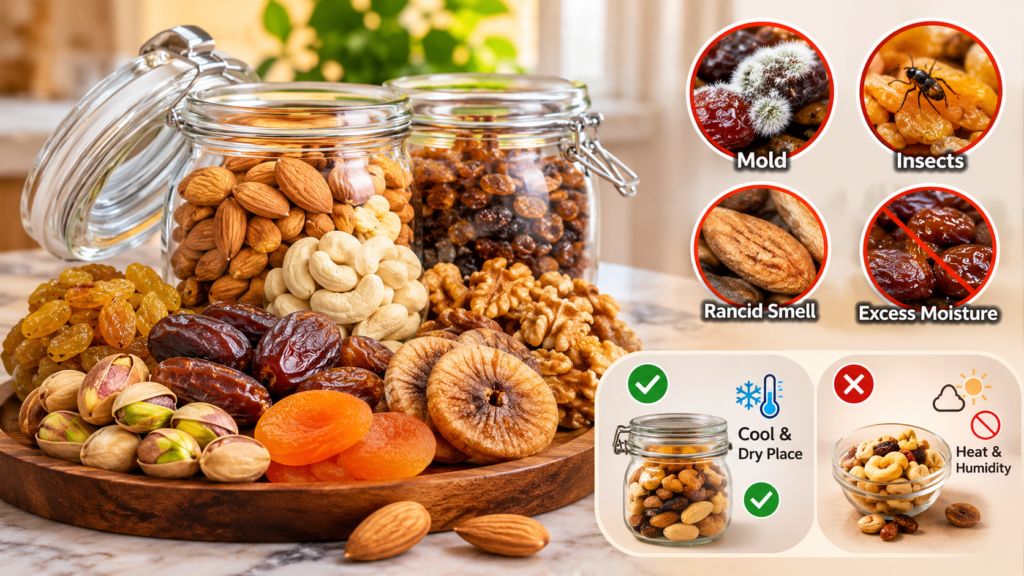
Many people assume that because a product is called a “dry fruit,” it will never go bad. This is not true. Almonds, walnuts, cashews, pistachios, raisins, dates, dried figs, and other dried products can develop unpleasant odors, changes in texture, mold, insect infestation, or other quality problems when they are exposed to unsuitable conditions.
Understanding when dry fruits go bad, how to recognize spoiled dry fruits, and which storage mistakes cause deterioration can help reduce food waste and protect the quality of your products.
Can Dry Fruits Go Bad?
Yes. Dry fruits can go bad.
sign to identify when do dry fruits go bad
- Type of dry fruit
- Moisture content
- Processing method
- Packaging
- Temperature
- Humidity
- Exposure to air
- Exposure to light
- Storage duration
- Handling practices
Nuts such as almonds, walnuts, cashews, and pistachios contain natural oils. Over time, these oils can oxidize, resulting in a stale or rancid smell and taste.
Dried fruits such as raisins, dates, and dried figs can also deteriorate when exposed to excess moisture. In unsuitable conditions, they may develop mold, fermentation, insects, or unpleasant odors.
Therefore, “dry” does not mean “cannot spoil.”
When Do Dry Fruits go bad Usually Start Losing Quality?
There is no single number of days after which every dry fruit becomes spoiled.
Different products have different shelf lives, and the manufacturer’s packaging and storage instructions should always be followed.
However, quality can start declining faster when dry fruits are exposed to:
Heat
High temperatures can accelerate the oxidation of natural oils, particularly in nuts.
Humidity
Moisture can soften dried fruits, encourage mold growth, and reduce shelf stability.
Oxygen
Repeated exposure to air can accelerate oxidation and cause some nuts to develop stale or rancid flavors.
Direct Sunlight
Light and heat can negatively affect product quality over time.
Poor Packaging
Damaged, loosely closed, or poorly sealed packaging allows air, moisture, insects, and contaminants to enter.
The important point is that storage conditions can make a major difference in how long dry fruits maintain good quality.
How to Tell If when Dry Fruits Go Bad
You should not rely on only one sign when checking dry fruits.
Look at the smell, appearance, texture, and overall condition of the product.
1. Unpleasant or Rancid Smell
One of the most noticeable warning signs in nuts is an unusual smell.
Fresh nuts generally have a mild, natural aroma.
Spoiled or rancid nuts may smell:
- Sour
- Stale
- Musty
- Chemical-like
- Strongly oily
- Unpleasant
A rancid smell can indicate that the natural fats in the nuts have deteriorated.
If the smell is clearly unpleasant, it is better not to consume the product.
2. Mold or Fuzzy Growth
Visible mold is a clear warning sign.
Look for unusual:
- White fuzzy growth
- Green spots
- Black patches
- Blue or gray growth
- Fuzzy areas on the surface
Mold should not simply be scraped off while the remaining dry fruits are consumed. If mold is present, the safest approach is to discard the affected product rather than trying to salvage it.
3. Unusual Moisture
Dried fruits are supposed to have a characteristic dried texture.
If raisins, figs, apricots, or other dried fruits become unusually wet, slimy, or damp, their quality may have deteriorated.
Moisture can enter because of:
- Humid weather
- Poor packaging
- Wet storage containers
- Condensation
- Improper refrigeration
- Repeated exposure to air
Excess moisture can create conditions that support microbial growth.
4. Insects or Webbing
Insects can sometimes infest stored food products.
Check for:
- Small insects
- Tiny holes
- Larvae
- Web-like material
- Powder or unusual residue
- Multiple damaged pieces
If an infestation is clearly present, do not simply remove the visible insects and continue eating the remaining product. Dispose of the affected product and clean the storage container thoroughly.
5. Major Changes in Texture
Texture naturally differs between dry fruits, so this sign must be interpreted carefully.
For example, dates can naturally be soft, while almonds should generally be firm and crunchy.
However, unexpected changes such as excessive softness, sliminess, unusual stickiness, or a rubbery texture may indicate moisture exposure or deterioration.
6. Unusual Taste
Taste should not be your first method of checking whether a suspicious product is safe.
If a dry fruit already has an unusual smell, visible mold, insect infestation, or other obvious signs of deterioration, do not taste it to “test” whether it is still good.
If a product that otherwise appears normal tastes unusually bitter, stale, sour, or rancid, stop consuming it.
When Dry Fruits Are Usually Still Fine
Not every change in appearance means that dry fruits have gone bad.
Some natural changes can occur without indicating spoilage.
Natural Color Variation
Dry fruits can naturally vary in:
- Color
- Size
- Shape
- Surface appearance
For example, dried fruits can become darker over time, and natural products may not have perfectly uniform colors.
Color alone is therefore not enough to determine whether a product is spoiled.
Sugar Crystals
Some dried fruits, particularly dates, may develop a whitish appearance because of natural sugar crystallization.
This can look different from fuzzy mold.
However, if you are unsure whether a white substance is sugar crystallization or mold, do not consume the product simply based on appearance. Check the product carefully and follow the manufacturer’s guidance when available.
Slight Hardening
Some dried fruits can become firmer as they lose additional moisture during storage.
A change in texture does not automatically mean the product is spoiled.
However, if hardening is accompanied by an unpleasant smell, mold, insects, or other warning signs, the product should not be consumed.
Why Do Dry Fruits Go bad?
Several factors can contribute to deterioration.
1. Moisture Exposure
Moisture is one of the biggest problems for dried foods.
Dried fruits are processed to reduce their water content. When they absorb moisture from the surrounding environment, their texture can change and the risk of spoilage can increase.
This is especially important in humid climates.
Keeping an open packet near a kitchen sink, stove, or other humid location can expose the product to moisture repeatedly.
2. Excessive Heat
Heat can accelerate the deterioration of fats.
This is particularly relevant for:
- Walnuts
- Almonds
- Cashews
- Pistachios
- Other nuts containing natural oils
Storing nuts near a stove, oven, or direct sunlight can reduce their quality faster.
3. Too Much Exposure to Air
Oxygen can contribute to oxidation.
Every time a package is opened, air enters.
If dry fruits are stored in a loosely closed packet for a long time, repeated exposure to oxygen can contribute to loss of freshness.
An airtight container can help reduce unnecessary exposure.
4. Direct Sunlight
Leaving dry fruits in direct sunlight can expose them to both light and heat.
A dark, cool storage location is generally more suitable than a sunny windowsill.
5. Poor Packaging
Packaging is important because it protects dry fruits from the environment.
A packet with:
- Broken seals
- Small holes
- Leaks
- Excessive air
- Moisture inside
may not protect the product adequately.
6. Wet Storage Containers
One common mistake is putting dry fruits into a container that has not been completely dried.
Even a small amount of water inside a container can introduce unwanted moisture.
Always make sure the storage container is clean and completely dry before filling it.
Common Storage Mistakes That Make when Dry Fruits go bad Spoil Faster
Mistake 1: Leaving the Packet Open
Leaving an opened packet on the kitchen counter exposes the contents to air, humidity, dust, and insects.
After opening, close the package properly or transfer the product to an airtight container.
Mistake 2: Keeping Dry Fruits Near the Stove
The area around a stove can become significantly warmer than the rest of the kitchen.
Repeated heat exposure can accelerate quality deterioration.
Choose a cool and dry storage location instead.
Mistake 3: Storing Them in a Humid Place
Bathrooms, areas near sinks, and other humid locations are unsuitable for storing dry fruits.
Humidity can affect both texture and shelf stability.
Mistake 4: Using a Wet Container
Never transfer dry fruits into a container immediately after washing it.
Allow the container to dry completely first.
Mistake 5: Mixing Old and New Stock
Adding a new packet of dry fruits to a container that still contains older stock can make it difficult to track how long the older product has been stored.
It is better to finish older stock first and clean the container before adding a fresh batch.
Mistake 6: Buying Too Much
Buying large quantities may appear economical, but it only makes sense if you can store and consume the product appropriately.
If you purchase more than you can use, the product may lose quality before you finish it.
Mistake 7: Ignoring the Packaging Date
Packaged products usually provide important information such as manufacturing details, best-before information, storage instructions, and batch information.
Do not ignore these details.
How to Store Dry Fruits Properly
Proper storage can help maintain quality for longer.
Step 1: Choose a Clean Container
Use a clean, food-safe, airtight container.
Glass containers and suitable food-grade plastic containers can work well.
Step 2: Make Sure It Is Completely Dry
This step is extremely important.
There should be no visible water or moisture inside the container.
Step 3: Keep the Container Airtight
A tight seal reduces exposure to:
- Air
- Humidity
- Dust
- Insects
- Household odors
Step 4: Store in a Cool, Dry Place
Keep the container away from direct sunlight, ovens, stoves, and humid areas.
Step 5: Consider Refrigeration
Refrigeration can be useful for many nuts and some dried fruits, particularly in warm or humid environments.
However, products should be stored in airtight containers so they do not absorb odors or moisture from the refrigerator.
Always follow the storage instructions on the product packaging.
Step 6: Use Clean, Dry Utensils
If you take dry fruits from a storage container, use clean and dry hands or utensils.
Introducing moisture or food residue into the container can reduce product quality.
Dry Fruit Storage Table
The following table provides a quick storage reference for commonly consumed dry fruits and dried fruits.
| Dry Fruit | Best Storage Method | Ideal Place | Approx. Storage Time* | Important Tip |
|---|---|---|---|---|
| Almonds | Airtight container | Cool, dry place / Refrigerator | 3–6 months | Keep away from heat and moisture |
| Walnuts | Airtight container | Refrigerator | 3–6 months | Refrigeration can help protect their natural oils |
| Cashews | Airtight container | Cool, dry place / Refrigerator | 3–6 months | Avoid humid areas |
| Pistachios | Airtight container | Cool, dry place / Refrigerator | 3–6 months | Keep tightly sealed after opening |
| Raisins | Airtight container | Cool, dry place / Refrigerator | 6–12 months | Prevent moisture from getting inside |
| Dates | Airtight container | Cool, dry place / Refrigerator | 6–12 months | Refrigeration can be useful for longer storage |
| Dried Figs (Anjeer) | Airtight container | Refrigerator | 3–6 months | Check regularly for excess moisture |
| Dried Apricots | Airtight container | Cool, dry place / Refrigerator | 6–12 months | Keep away from direct sunlight |
| Prunes | Airtight container | Refrigerator | 6–12 months | Seal properly after every use |
| Dried Cranberries | Airtight container | Cool, dry place | 6–12 months | Protect from heat and humidity |
*Storage times are approximate quality guidelines, not guarantees. Actual shelf life depends on the product, processing, packaging, moisture, temperature, storage conditions, and whether the package has been opened. Always follow the manufacturer’s storage instructions and best-before information.
Simple storage rule: Airtight container + cool, dry, dark place + clean, dry utensils = better dry-fruit quality.
Does Refrigeration Stop Dry Fruits From Going Bad?
Refrigeration can help slow quality deterioration for many products, but it does not make dry fruits immune to spoilage.
Cold storage can slow oxidation and help preserve some nuts and dried fruits.
However, moisture and condensation can become problems if products are stored incorrectly.
Use airtight containers and follow the manufacturer’s storage recommendations.
Can You Freeze Dry Fruits?
Freezing can be useful for longer-term storage of some nuts and dried fruits.
If you are freezing a large quantity:
- Divide it into smaller portions.
- Use airtight, freezer-safe packaging.
- Remove as much excess air as practical.
- Label the container with the storage date.
- Take out only the amount you need.
Repeated temperature changes can create condensation, so repeatedly thawing and refreezing the same container is not ideal.
Different Dry Fruits Can Have Different Storage Needs
Not all dry fruits behave exactly the same way.
Almonds
Almonds contain natural oils and can develop rancid flavors if exposed to heat and air for extended periods.
Walnuts
Walnuts are also rich in natural oils and can be particularly sensitive to poor storage conditions.
Cashews
Cashews generally have a firm texture but can lose freshness when exposed to heat, air, or moisture.
Pistachios
Pistachios can lose their crisp texture when exposed to humidity.
Raisins
Raisins naturally have a chewy texture, but excessive moisture can make them unusually wet or sticky.
Dates
Dates can naturally be soft and sticky. Some varieties may also develop sugar crystals during storage.
Dried Figs
Dried figs can naturally have a slightly moist and chewy texture. However, unusual wetness, fermentation-like odors, or visible mold are warning signs.
The important lesson is that you should judge each dry fruit according to its natural characteristics rather than applying exactly the same standard to every product.
What Is the Difference Between “Old” and “Spoiled”?
This is an important distinction.
A dry fruit can become old or stale without showing obvious microbial spoilage.
For example, nuts may gradually lose their fresh flavor and develop a stale or rancid taste because their natural oils have oxidized.
A product can therefore have reduced quality even when there is no visible mold.
On the other hand, mold, insect infestation, fermentation-like odors, or other clear signs of contamination indicate a more serious quality problem.
When in doubt, it is safer not to consume a product that shows clear signs of deterioration.
Should You Wash Dry Fruits Before Storage?
Generally, you should not introduce additional moisture to dry fruits before storing them unless the product instructions specifically require washing.
Washing and then storing wet or damp dry fruits can create a moisture-rich environment that may encourage spoilage.
If you wash a product before eating it, it should be handled appropriately and consumed or prepared according to food-safety practices rather than returned wet to long-term dry storage.
What Should You Do With Spoiled Dry Fruits?
If dry fruits show clear signs of spoilage, such as:
- Mold
- Strong rancid odor
- Insect infestation
- Fermentation-like smell
- Unusual sliminess
- Significant contamination
do not try to make them usable by roasting, washing, seasoning, or mixing them with fresh products.
Discard the affected product and clean the storage container before using it again.
How to Reduce Dry Fruit Waste
Proper planning can help prevent unnecessary waste.
Buy According to Your Usage
If you consume dry fruits slowly, smaller packs may be more practical than buying a very large quantity.
Store Immediately
Do not leave opened packets exposed to kitchen humidity for long periods.
Use Older Stock First
If you have multiple packs, use the older product before opening newer ones, provided the older product still appears and smells normal.
Label Storage Containers
If you transfer dry fruits to another container, writing the purchase or opening date on the container can help you keep track of the stock.
Inspect Before Eating
Take a few seconds to check the smell, appearance, and condition before consuming stored dry fruits.
Frequently Asked Questions
Do dry fruits expire?
Dry fruits have a limited shelf life. The exact period depends on the product, processing, packaging, and storage conditions. Always follow the manufacturer’s best-before information.
Can dry fruits go bad in the refrigerator?
Yes. Refrigeration can slow quality deterioration but does not prevent spoilage completely. Incorrectly sealed containers can also allow moisture or odors to affect the product.
Can I eat dry fruits after the best-before date?
A best-before date is related to expected quality under recommended storage conditions, but it should not be treated as a guarantee that every product is safe indefinitely after that date. Inspect the product and follow the manufacturer’s guidance. If there are signs of spoilage, do not consume it.
Why do walnuts sometimes smell strange?
Walnuts contain natural oils that can oxidize over time. Poor storage, heat, oxygen, and prolonged storage can contribute to rancid flavors and odors.
Why are my raisins becoming sticky?
Raisins naturally have a soft and sticky texture, but excessive stickiness or moisture can indicate changes in storage conditions. Check for unusual smell, mold, fermentation, or other signs of deterioration.
Is white color on dates always mold?
No. Some dates can develop visible sugar crystals during storage. However, mold can also appear white or fuzzy. If you cannot confidently distinguish between natural crystallization and mold, do not consume the product.
Can I remove mold from dry fruits and eat the rest?
It is not recommended to simply remove visible mold and consume the remaining product. When mold is clearly present, discard the affected product.
Final Thoughts
Dry fruits can last considerably longer than many fresh foods, but they are not impossible to spoil.
The biggest threats to their quality are often moisture, heat, oxygen, light, insects, poor packaging, and improper storage.
Nuts such as almonds, walnuts, cashews, and pistachios can develop rancid flavors when their natural oils deteriorate. Dried fruits such as raisins, dates, and figs can suffer from moisture-related quality problems, mold, fermentation, or insect infestation.
The good news is that many storage mistakes are easy to avoid.
Keep dry fruits in clean, completely dry, airtight containers. Store them away from heat, humidity, and direct sunlight. Buy quantities that you can use within a reasonable period, follow the manufacturer’s storage instructions, and inspect products before eating them.
When a dry fruit has an unusual smell, visible mold, insect infestation, or other clear signs of spoilage, do not try to hide or remove the problem—discard the affected product.
With proper storage and regular inspection, you can help maintain the freshness, flavor, texture, and quality of your dry fruits for longer.