
dryfruits Discover the nutritional value, health benefits, essential vitamins, and best ways to include almonds, walnuts, cashews, pistachios, raisins, dates, figs, and other dry fruits in your daily diet.
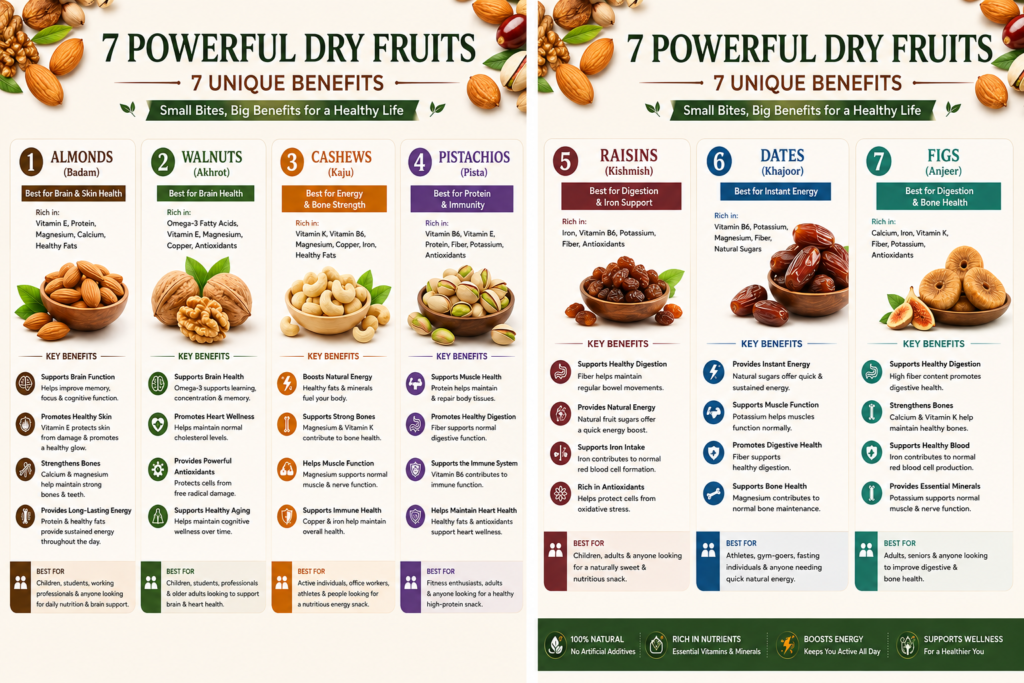
Table of Contents
1. Almonds (Badam)
Key nutrients: Vitamin E, magnesium, protein, fiber, healthy unsaturated fats, calcium.
Almonds dryfruits are one of the most popular nutrient-dense dry fruits. They provide vitamin E, an antioxidant that helps protect cells from oxidative stress. Their combination of protein, fiber and healthy fats can also contribute to satiety, making them a useful addition to a balanced diet.
Main nutritional highlights:
- Vitamin E: antioxidant support
- Magnesium: important for normal muscle and nerve function
- Protein: supports growth and tissue maintenance
- Fiber: supports normal digestion
- Healthy fats: mainly unsaturated fats
Best way to eat: A small handful of almonds can be added to breakfast, oatmeal, yogurt or smoothies. Soaking almonds is a common dietary practice, but it isn’t necessary to obtain their nutrients.
2. Walnuts (Akhrot)
Key nutrients: Omega-3 fatty acid ALA, magnesium, copper, manganese, protein and fiber.
Walnuts dryfruits are particularly interesting because they contain alpha-linolenic acid (ALA), a plant-based omega-3 fatty acid. They also provide copper and manganese along with protein and fiber.
Walnuts are often associated with brain health, but it is better for your blog to phrase this carefully: their nutrient profile supports overall health, while eating walnuts does not literally “make the brain sharper.”
Main nutritional highlights:
- ALA omega-3: supports cardiovascular health as part of a balanced diet
- Copper: supports normal connective tissue and energy metabolism
- Manganese: contributes to normal metabolism and antioxidant defenses
- Protein & fiber: support satiety and digestive health
Best way to eat: Add chopped walnuts to oatmeal, salads, yogurt or homemade snacks.
3. Cashews (Kaju)
Key nutrients: Copper, magnesium, phosphorus, zinc, iron, protein and healthy fats.
Cashews dryfruits have a creamy texture and are especially notable for their copper and magnesium content. Copper is involved in energy metabolism and connective tissue formation, while magnesium has many roles in normal muscle and nerve function.
Cashews can be useful in both sweet and savory foods and are commonly used in Indian cuisine.
Main nutritional highlights:
- Copper: supports energy metabolism and connective tissue
- Magnesium: supports normal muscle and nerve function
- Phosphorus: contributes to bones and teeth
- Zinc: supports normal immune function
- Iron: contributes to normal oxygen transport
Best way to eat: Use them as a snack or add them to curries, salads, stir-fries and homemade nut mixes.
4. Pistachios (Pista)
Key nutrients: Protein, fiber, vitamin B6, copper, potassium, phosphorus and antioxidants.
Pistachios dryfruits are a particularly interesting choice because they provide protein and fiber along with several micronutrients. Their green and purple pigments also contain antioxidant compounds.
Because pistachios are commonly eaten one by one, in-shell pistachios can also make portion awareness easier compared with eating directly from a large container of shelled nuts.
Main nutritional highlights:
- Vitamin B6: supports normal protein and glycogen metabolism
- Copper: supports normal energy metabolism
- Fiber: supports digestive health
- Protein: contributes to maintenance of body tissues
- Potassium: supports normal muscle and nervous-system function
Best way to eat: Choose unsalted or lightly salted pistachios when possible and add them to salads, yogurt or desserts.
5. Raisins (Kishmish)
Key nutrients: Natural carbohydrates, fiber, potassium, copper and iron.
Raisins dryfruits are dried grapes, so removing water concentrates their natural sugars and calories. They provide quick energy along with fiber and minerals such as potassium and copper.
Because raisins are dried fruit, they are more calorie-dense by weight than fresh grapes. That doesn’t make them unhealthy—it simply means portion size matters.
Main nutritional highlights:
- Potassium: important for normal muscle and nerve function
- Copper: supports normal energy metabolism
- Iron: contributes to normal red-blood-cell formation and oxygen transport
- Fiber: supports normal digestion
Best way to eat: Add a small portion to oatmeal, cereal, trail mix or yogurt.
6. Dates (Khajoor)
Key nutrients: Carbohydrates, fiber, potassium, copper, magnesium and vitamin B6.
Dates dryfruits are naturally sweet and provide carbohydrates, making them a convenient energy-rich snack. They also contain fiber and several minerals.
Since dates are naturally concentrated in sugar and calories, they are best viewed as a nutrient-rich dried fruit, not as a low-calorie food.
Main nutritional highlights:
- Natural carbohydrates: provide energy
- Fiber: supports digestion
- Potassium: contributes to normal muscle and nervous-system function
- Magnesium: supports normal energy metabolism
- Vitamin B6: supports normal protein and carbohydrate metabolism
Best way to eat: Enjoy them on their own, chop them into oatmeal, or combine them with nuts for a balanced snack.
7. Figs (Anjeer)
Key nutrients: Fiber, calcium, potassium, copper and manganese.
Dried figs dryfruits are especially notable for their fiber and mineral content. They also provide calcium and potassium, making them a useful addition to a varied diet.
Figs are naturally sweet and calorie-dense when dried, so moderate portions are sensible.
Main nutritional highlights:
- Fiber: supports digestive health
- Calcium: contributes to normal bones and teeth
- Potassium: supports normal muscle and nerve function
- Copper: supports energy metabolism
- Manganese: contributes to normal metabolism
Best way to eat: Add chopped dried figs to porridge, yogurt, cereal or a homemade trail mix.
8. Other Dry Fruits
Tumhare blog ko aur comprehensive banane ke liye tum prunes, dried apricots, cranberries and other dried fruits ka bhi short section add kar sakte ho.
Dried Apricots
Rich in carotenoids, potassium and fiber. They have a naturally sweet-tart flavor and work well in breakfast bowls and trail mixes.
Prunes
Prunes are dried plums and are particularly well known for their fiber content. They can be included as part of a balanced diet.
Dried Cranberries
They are commonly used in cereals, salads and trail mixes. However, many commercial varieties contain added sugar, so the nutrition label is worth checking.