Buying dry fruits may appear simple, but selecting the best dry fruits requires careful attention to several factors. Size, color, and price can give you a basic idea, but they do not always reveal the actual quality of the product.
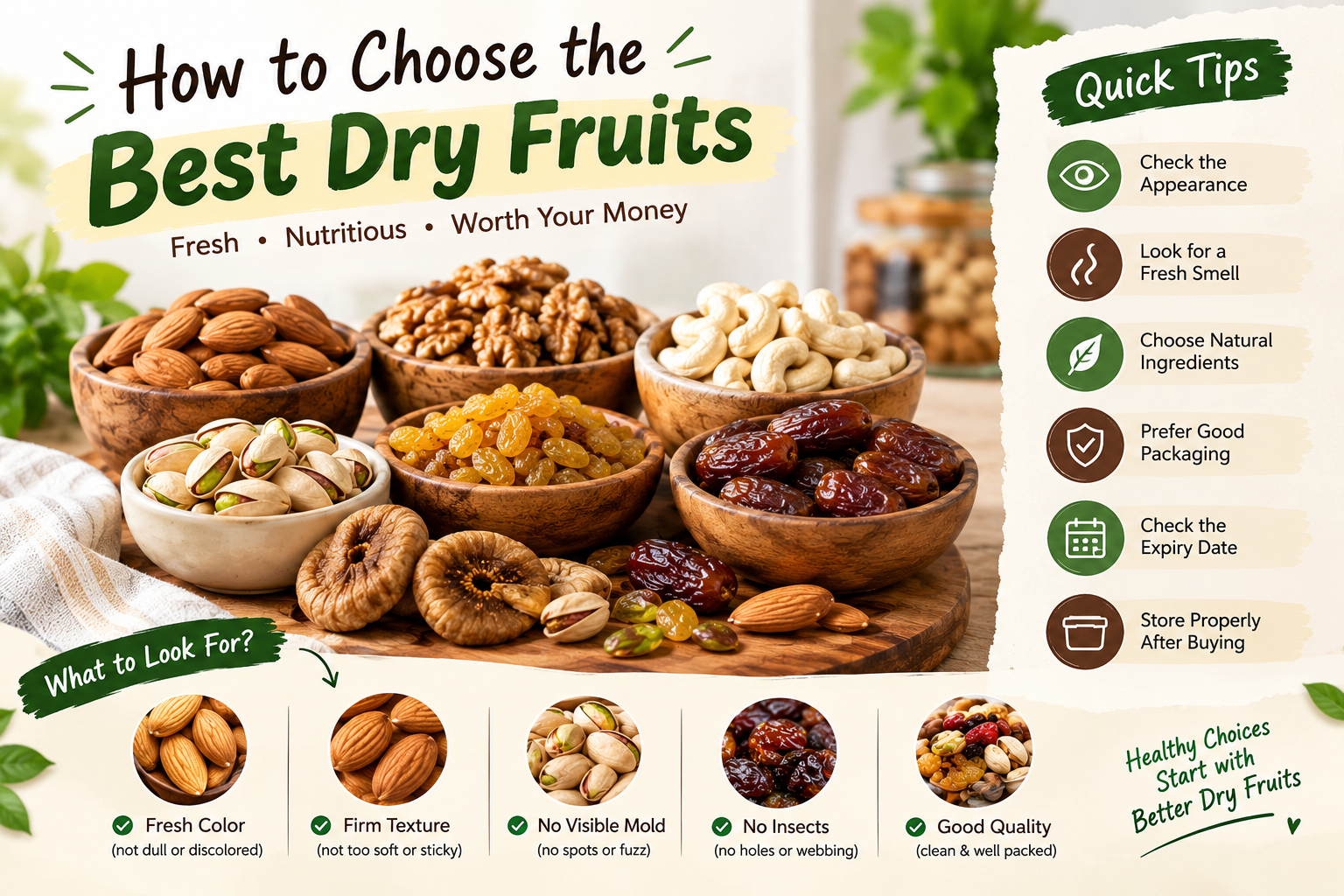
When choosing the best dry fruits, always check their freshness, packaging, quality, and expiry date.
Freshness, variety, processing method, packaging, ingredients, storage conditions, seller reputation, and best-before date all influence the quality and value of dry fruits. A product may look attractive but still be stale, improperly stored, overly processed, or unsuitable for your dietary needs.
Whether you are buying almonds, cashews, walnuts, pistachios, raisins, dates, dried figs, apricots, or mixed dry fruits, understanding how to evaluate them can help you make a safer, smarter, and more economical purchase.
When choosing the best dry fruits, always check their freshness, packaging, quality, and expiry date.
What Makes The Best Dry Fruit High Quality?
High-quality dry fruits should have the natural characteristics expected from their variety. They should generally have a pleasant aroma, suitable texture, clean appearance, and no visible signs of spoilage or contamination.
Quality also depends on how the dry fruits were harvested, processed, transported, and stored. Even a premium variety can lose its quality if it is exposed to heat, moisture, air, or poor packaging for a long time.
Choosing the best dry fruits depends on freshness, quality, taste, and proper storage.
A good dry fruit product should ideally have:
- A fresh and natural appearance
- A pleasant, mild aroma
- The correct texture for its variety
- No visible mold or insect damage
- Minimal unnecessary additives
- Properly sealed packaging
- Clear labeling and ingredient information
- A reasonable best-before period
- Reliable storage and transportation conditions
It is important to remember that appearance alone cannot determine quality. Some dry fruits may look bright because they have been treated, polished, sweetened, or flavored. Similarly, a slightly uneven appearance does not always mean that the product is poor. Natural products can vary in size, shape, and color.
The best approach is to evaluate the product as a whole rather than relying on one feature.
Freshness
Freshness affects taste, aroma, texture, and overall eating quality. Nuts contain natural oils, and these oils can become rancid when the product is stored for too long or exposed to heat and air.
Dried fruits such as raisins, dates, and figs can also lose quality if they become excessively dry, sticky, fermented, or exposed to moisture.
Variety and Grade
Different varieties of the same dry fruit can have different sizes, flavors, textures, and prices. For example, almonds may differ in size and origin, while cashews may be sold in different grades based on their shape and breakage.
A higher price does not automatically mean better quality. It is important to understand what you are paying for, such as variety, grade, origin, processing, or packaging.
Processing
Dry fruits may be sold raw, roasted, salted, sweetened, flavored, coated, or fried. Processing can change the taste, texture, shelf life, and nutritional profile of the product.
If you prefer a simple product, choose dry fruits with minimal processing and a short ingredient list.
How to Identify Fresh Dry Fruits
Freshness is one of the most important factors when buying dry fruits. A fresh product usually tastes better, has a more pleasant texture, and is less likely to have developed rancid or stale flavors.
When purchasing loose dry fruits, inspect them carefully. When buying packaged products, use the label, packaging condition, aroma, and customer reviews to assess freshness.
Check the Aroma
Fresh dry fruits generally have a mild, natural aroma. Nuts may have a pleasant nutty smell, while dried fruits may have a natural fruity or caramel-like aroma.
The best dry fruits should have a fresh aroma, natural color, and good texture.
Be cautious if you notice:
- A strong rancid smell
- A sour or fermented odor
- A musty smell
- A chemical-like smell
- An unusually stale aroma
A rancid smell is especially important to notice in almonds, walnuts, cashews, pistachios, and other nuts because their natural oils can deteriorate over time.
If the product smells unpleasant before you taste it, it is better not to consume it.
Check the Texture
Every dry fruit has a natural texture, so you should judge it according to its variety.
- Almonds should generally be firm and crunchy.
- Cashews should be crisp but not excessively hard or chewy.
- Walnuts should have a firm, slightly crumbly texture.
- Pistachios should be crisp and not soft or rubbery.
- Raisins should be soft and chewy but not wet or fermented.
- Dates should be naturally soft or semi-soft, depending on the variety.
- Dried figs should be chewy and slightly moist but not slimy or excessively sticky.
Avoid products that feel unusually soft, damp, rubbery, or oily unless that texture is natural to the product. Excessive moisture can encourage mold growth and reduce shelf life.
At the same time, extremely hard or brittle dried fruits may indicate that they have been stored for too long or have lost too much moisture.
Examine the Color
Color should be evaluated according to the natural variety of the dry fruit. Some variation is normal, especially in products without artificial coloring.
Be cautious of:
- Unusually dark or black patches
- Green, white, or fuzzy spots
- Uneven discoloration
- Excessive dullness
- Artificially bright or unnatural colors
Color alone is not a final test of quality. Some dried fruits naturally darken during drying, while others may be treated to maintain their color. Always consider the ingredient list and product description along with appearance.
Look for Visible Quality Issues
Before purchasing, carefully check for:
- Visible mold
- Insect damage
- Small holes or webbing
- Excessive dust or dirt
- Broken or crushed pieces
- Unusual discoloration
- Excessive moisture
- Sticky residue
- Damaged or poorly sealed packaging
A few broken pieces may be normal, especially in mixed packs or lower grades. However, a large amount of breakage may indicate rough handling, poor transportation, or lower product quality.
Raw vs Roasted Dry Fruits
Dry fruits are commonly available in raw, roasted, salted, flavored, and coated forms. Each type has a different taste, texture, and ingredient profile.
Raw Best Dry Fruits
Raw dry fruits are generally not roasted or heated after processing. They have a natural flavor and can be used in cooking, baking, soaking, grinding, or eating as snacks.
They are useful when you want to control how the product is prepared. For example, you can roast raw almonds at home without adding salt, sugar, or oil.
When buying raw dry fruits, check whether the product is truly plain. Some products described as “raw” may still be treated, blanched, or processed in other ways. Read the label carefully if this matters to you.
Roasted Dry Fruits
Roasted dry fruits are heated to develop a deeper flavor and a crispier texture. Roasting can make nuts more enjoyable as snacks, but the final product depends on the roasting method.
Check whether the product is:
- Dry roasted
- Roasted in oil
- Salted
- Sweetened
- Flavored
- Coated with spices or other ingredients
Dry-roasted products may have a shorter ingredient list, while oil-roasted products may contain added oils. Neither option is automatically suitable for everyone, so choose according to your taste and dietary preferences.
Which One Should You Choose?
Choose raw dry fruits if:
- You want minimal processing.
- You plan to cook or bake with them.
- You want to roast them at home.
- You prefer to avoid added salt, sugar, or oil.
Choose roasted dry fruits if:
- You prefer a crispier texture.
- You want a ready-to-eat snack.
- You enjoy a stronger roasted flavor.
- You are comfortable with the listed ingredients.
The most important point is to read the label rather than assuming that raw or roasted automatically means healthier or better.
Unsalted vs Salted Dry Fruits
Salted and unsalted dry fruits serve different preferences and dietary needs.
Unsalted Dry Fruits
Unsalted dry fruits are a simple option for everyday use because they do not contain added salt. They can be added to breakfast bowls, desserts, salads, smoothies, and homemade recipes without significantly changing the flavor of the dish.
They may be especially useful for people who are trying to reduce their sodium intake or who want greater control over the ingredients in their diet.
Salted Dry Fruits
Salted dry fruits can be flavorful and convenient, but the amount of sodium can vary significantly between products. Some varieties may contain only a small amount of salt, while others may be heavily seasoned.
If you are monitoring sodium intake, compare the nutrition labels and serving sizes. Also check whether the product contains additional flavoring powders, preservatives, or oils.
Flavored and Coated Dry Fruits
Flavored dry fruits may contain ingredients such as:
- Sugar
- Honey
- Syrups
- Vegetable oils
- Spice blends
- Artificial or natural flavors
- Chocolate or other coatings
- Preservatives
These products can be enjoyable occasionally, but they are different from plain dry fruits. Always check the ingredient list so you know exactly what you are buying.
Why Packaging Matters
Packaging plays a major role in protecting dry fruits from moisture, air, light, insects, dust, and contamination.
Nuts contain natural oils that can oxidize when exposed to air. Dried fruits can absorb moisture from the environment, which may affect their texture and encourage spoilage.
What Good Packaging Should Provide
When buying packaged dry fruits, look for:
- Airtight or properly sealed packaging
- Strong, undamaged pouches or containers
- Protection from direct light
- Clear product labeling
- Ingredient information
- Nutritional information
- Net quantity
- Manufacturing and best-before dates
- Batch or lot information
- Storage instructions
- Seller or manufacturer details
Transparent packaging can help you inspect the product, but it should still provide adequate protection from light and air. A clear pack that has been exposed to sunlight for a long time may not preserve quality as well as a properly protected package.
Check the Seal
Do not purchase a package if:
- The seal is broken.
- The pouch is leaking.
- The container is swollen or damaged.
- There is moisture inside.
- The product appears compressed or contaminated.
- The label is missing or unclear.
For larger quantities, packaging becomes even more important. Bulk products should be stored in clean, food-safe containers and protected from humidity and heat.
How to Store Dry Fruits at Home
Proper storage helps preserve the flavor, texture, and freshness of dry fruits after purchase.
Use an Airtight Container
After opening a package, transfer the dry fruits to a clean, dry, airtight container. This reduces exposure to air, moisture, insects, and household odors.
Glass jars, food-grade plastic containers, and airtight metal containers can all be suitable if they are clean and completely dry.
Do not store new dry fruits in a container that still contains old pieces, crumbs, oil, or moisture. Clean and dry the container before refilling it.
Choose the Right Location
Keep dry fruits away from:
- Direct sunlight
- Stoves and ovens
- Dishwashers
- Humid areas
- Open windows
- Heat-producing appliances
- Strong-smelling foods
A cool, dry, dark cupboard may be suitable for short-term storage, depending on the product and climate.
Refrigeration
Refrigeration can help extend the quality of many nuts and dried fruits, especially in warm or humid climates. It can slow down oxidation and help preserve natural oils.
However, refrigerated products should be kept in airtight containers to prevent them from absorbing odors from other foods.
Before opening a refrigerated container, allow it to reach room temperature if condensation is likely to form. Moisture inside the container can affect quality.
Freezing for Long-Term Storage
Freezing may be useful when buying large quantities that will not be consumed quickly. Divide the product into smaller airtight portions so you only remove what you need.
Avoid repeatedly thawing and refreezing the same container because temperature changes can create condensation and affect texture.
Check the Product Regularly
Even properly stored dry fruits should be checked from time to time. Look for:
- Unusual smell
- Mold
- Insects
- Excessive moisture
- Changes in texture
- Rancid taste
If you notice clear signs of spoilage, do not try to remove only the affected pieces and consume the rest. Contamination may not always be visible.
Buying Dry Fruits Online: What Should You Check?
Online shopping provides access to many varieties, pack sizes, brands, and price ranges. However, you cannot physically inspect the product before ordering, so product information and seller reliability become especially important.
Before placing an order, check the following details.
1. Product Details
Read the product description carefully. Confirm:
- The exact type of dry fruit
- Whether it is raw or roasted
- Whether it is salted or unsalted
- Whether it contains added sugar or oil
- The stated quantity
- The product grade or variety
- The country or region of origin, if provided
- The expected delivery format
Do not rely only on the product title. A title may say “premium dry fruits,” while the detailed description reveals that the product is flavored, broken, mixed, or processed.
2. Ingredients
The ingredient list tells you whether the product is plain or contains additional ingredients.
For plain almonds, the ingredient list may contain only almonds. For flavored or roasted products, it may include oil, salt, sugar, spices, preservatives, or flavoring agents.
If you have allergies or dietary restrictions, read the allergen information carefully. Products processed in facilities that handle peanuts, dairy, gluten, or other allergens may carry cross-contamination warnings.
3. Customer Reviews
Customer reviews can provide useful information about:
- Freshness
- Taste
- Texture
- Packaging
- Quantity
- Delivery condition
- Product consistency
- Seller response to complaints
Read multiple reviews instead of relying on one extremely positive or negative comment. Recent reviews are often more useful because product quality, packaging, or suppliers may change over time.
Pay attention to repeated complaints about stale smell, moisture, insects, damaged packaging, or incorrect quantity.
4. Packaging and Delivery
Look for sellers who clearly explain how the product is packed and stored before dispatch.
Consider whether the product is likely to be exposed to heat during transportation. This can be especially important for nuts, chocolate-coated products, and dried fruits in warm weather.
Check the seller’s return, replacement, or refund policy in case the product arrives damaged, stale, leaking, or different from the description.
5. Price Per Quantity
Do not compare products only by their total price. A small pack may appear inexpensive but cost more per unit than a larger pack.
Compare the price per:
- 100 grams
- 250 grams
- 500 grams
- Kilogram
Also compare the actual product type. A premium whole-nut pack should not be compared directly with a broken-piece grade or a flavored product.
6. Seller Reputation
Choose sellers with clear business information, consistent reviews, transparent product descriptions, and reliable customer service.
A trustworthy seller should provide accurate information about quantity, ingredients, packaging, and dates. Avoid listings with vague descriptions, unrealistic claims, or unclear product images.
Common Mistakes People Make While Buying Dry Fruits
Choosing Only by Appearance
A larger, brighter, or more uniform product is not necessarily better. Some products may be polished, treated, or colored to improve their appearance.
Instead of judging only by looks, consider aroma, texture, ingredients, packaging, and freshness.
Buying Only on the Basis of Price
A very low price may be attractive, but it can sometimes reflect:
- Lower grade
- Smaller pieces
- Higher breakage
- Older stock
- Poor packaging
- Limited shelf life
- Different variety
- Added fillers or coatings
This does not mean that expensive products are always better. Compare the price with the quantity, grade, ingredients, and overall quality.
Ignoring the Label
The label can reveal important information about the product. Ignoring it may lead you to buy something that contains added salt, sugar, oil, preservatives, or allergens.
Always check the ingredient list, nutrition information, net quantity, best-before date, and storage instructions.
Buying More Than You Can Store Properly
Bulk buying can reduce the cost per unit, but it is useful only if you can store the product correctly and consume it within a reasonable period.
Buying too much can lead to stale flavor, rancidity, moisture absorption, insect infestation, or unnecessary waste.
Assuming All Dry Fruits Are the Same
Different dry fruits have different storage needs, textures, shelf lives, and processing methods. Walnuts may require more careful storage because of their oil content, while dates may naturally be softer and stickier.
Evaluate each product according to its own characteristics.
Not Checking for Allergens
Nuts are common allergens. If you or someone in your household has a food allergy, check the allergen statement and possible cross-contamination warnings before purchasing.
Dry Fruits for Different Uses
Different dry fruits work well for different purposes. Choosing according to your intended use can help you select the right variety, grade, and form.
For Everyday Snacking
For snacking, choose products with a pleasant texture and minimal unnecessary ingredients.
Popular options include:
- Almonds
- Pistachios
- Cashews
- Walnuts
- Raisins
- Dates
Unsalted or lightly processed varieties may be more versatile for regular use.
For Baking
For cakes, cookies, breads, granola, and muffins, consider:
- Almonds
- Walnuts
- Raisins
- Dried figs
- Dried apricots
- Dates
Chopped or broken pieces may be more economical for baking because appearance is less important. However, make sure they are fresh and free from excessive moisture.
For Desserts
Pistachios, cashews, almonds, dates, raisins, and dried figs are commonly used in desserts.
For garnishing, choose attractive whole pieces. For fillings, pastes, or blended desserts, broken pieces may provide better value.
For Breakfast
Dry fruits can be added to:
- Oatmeal
- Yogurt
- Cereal
- Smoothie bowls
- Homemade granola
- Fruit bowls
- Chia pudding
Choose products that match the flavor of the meal. Unsalted nuts and naturally dried fruits are generally easier to combine with different breakfast recipes.
For Cooking
Cashews, almonds, raisins, dates, and dried coconut are often used in savory dishes, sauces, rice preparations, and traditional recipes.
For cooking, focus on freshness and flavor rather than perfect appearance. Broken pieces can often be used effectively and may cost less.
Frequently Asked Questions
How can I tell if dry fruits are fresh?
Check their aroma, texture, appearance, packaging, and best-before information. Fresh nuts should not smell rancid, and dried fruits should not have a sour, fermented, or moldy odor.
Avoid products with visible mold, insect damage, excessive moisture, unusual discoloration, or damaged packaging.
Should I buy raw or roasted dry fruits?
The choice depends on your taste and intended use. Raw dry fruits are useful for cooking, baking, soaking, or home roasting. Roasted dry fruits offer a crispier texture and stronger flavor.
Always check whether roasted products contain added oil, salt, sugar, or seasonings.
Are salted dry fruits suitable for everyday use?
Salted dry fruits can be included according to your dietary needs, but check the sodium content if you are monitoring salt intake.
Unsalted varieties may be more flexible because you can add them to both sweet and savory recipes without changing the flavor significantly.
How should I store dry fruits?
Store them in a clean, dry, airtight container in a cool and dark place. In warm or humid climates, refrigeration may help preserve quality.
Follow the storage instructions on the package, especially after opening.
Can I store different dry fruits together?
It is usually better to store strongly flavored or highly moist dried fruits separately from nuts. Dates, figs, and raisins may transfer moisture or aroma to almonds, cashews, and pistachios.
If you store a mixed product, use an airtight container and monitor it regularly for changes in texture or smell.
Are expensive dry fruits always better?
No. Price can depend on variety, grade, origin, processing, packaging, brand, and seller margins.
A moderately priced product with good freshness, proper packaging, and clear labeling may be a better choice than an expensive product with poor storage or unnecessary additives.
Is buying dry fruits online a good option?
Yes, online buying can be convenient, but you should check the seller, product description, ingredients, quantity, packaging, reviews, delivery conditions, and return policy.
Choose listings with clear information and consistent customer feedback.
What should I do if dry fruits smell rancid?
Do not consume them. A rancid smell or bitter, stale taste can indicate that the natural oils have deteriorated.
Do not try to hide the smell by roasting, seasoning, or mixing the product with other foods.
Should I buy whole pieces or broken pieces?
Whole pieces are generally preferred for snacking and presentation. Broken pieces can be a practical and economical choice for baking, cooking, grinding, and desserts.
The most important factor is freshness, not just shape.
Final Thoughts
Choosing the best dry fruits requires more than selecting the largest pack or the lowest-priced option. Freshness, aroma, texture, appearance, ingredients, processing, packaging, storage, and seller reliability all contribute to the quality of the product.
Before buying, decide how you plan to use the dry fruits. For everyday snacking, you may prefer plain or lightly processed varieties. For baking and cooking, broken pieces can offer better value. For long-term storage, focus on airtight packaging and suitable storage conditions.
Always read the label, compare the price per quantity, inspect the packaging, and avoid products with unusual odors, visible mold, excessive moisture, or unclear information.
Whether you are purchasing a small pack for your home or buying in bulk, a few minutes of careful checking can help you choose a fresher, better-quality, and more suitable product.
Quality starts with a smart purchase—and proper storage helps preserve it.